
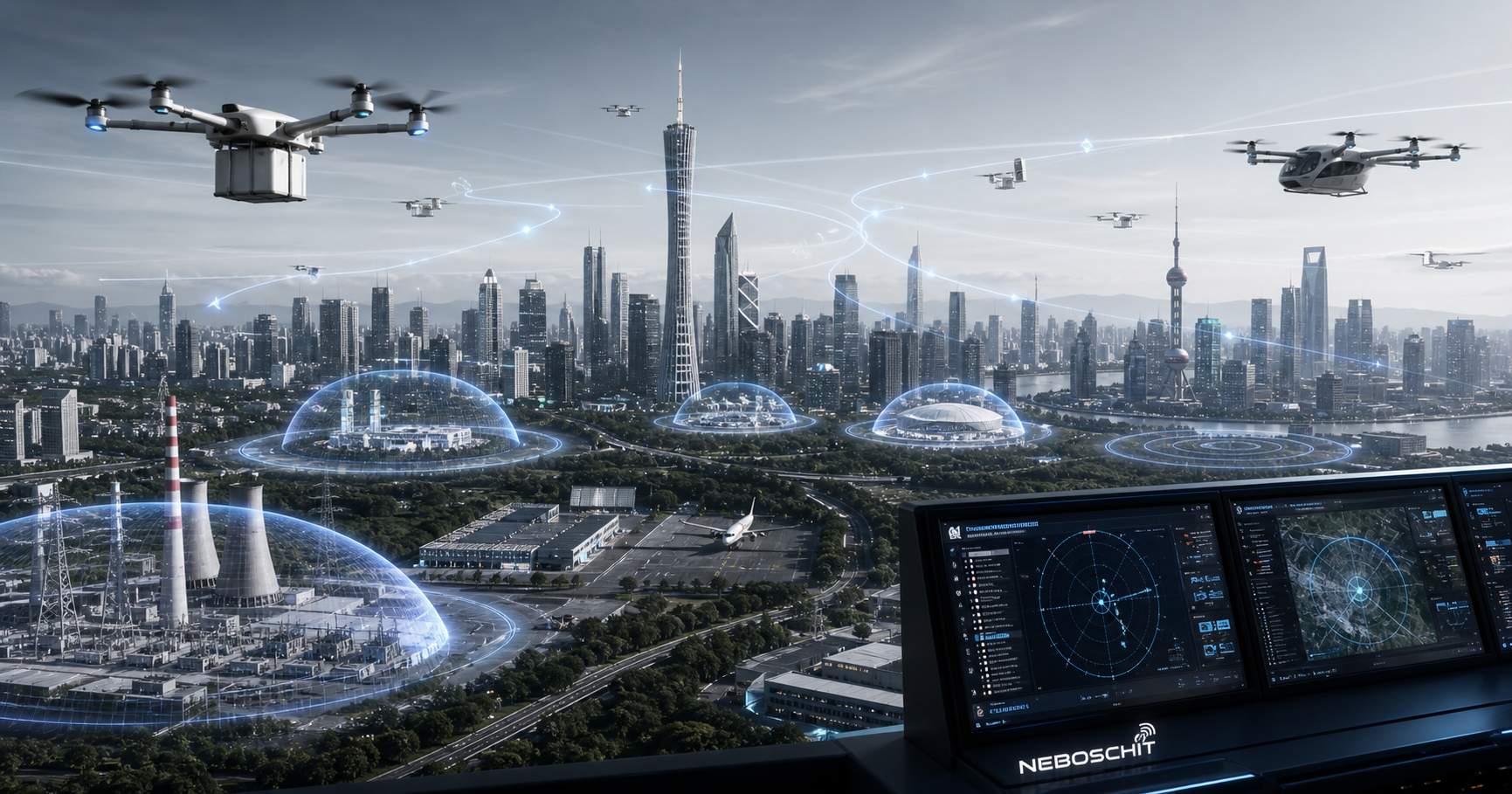
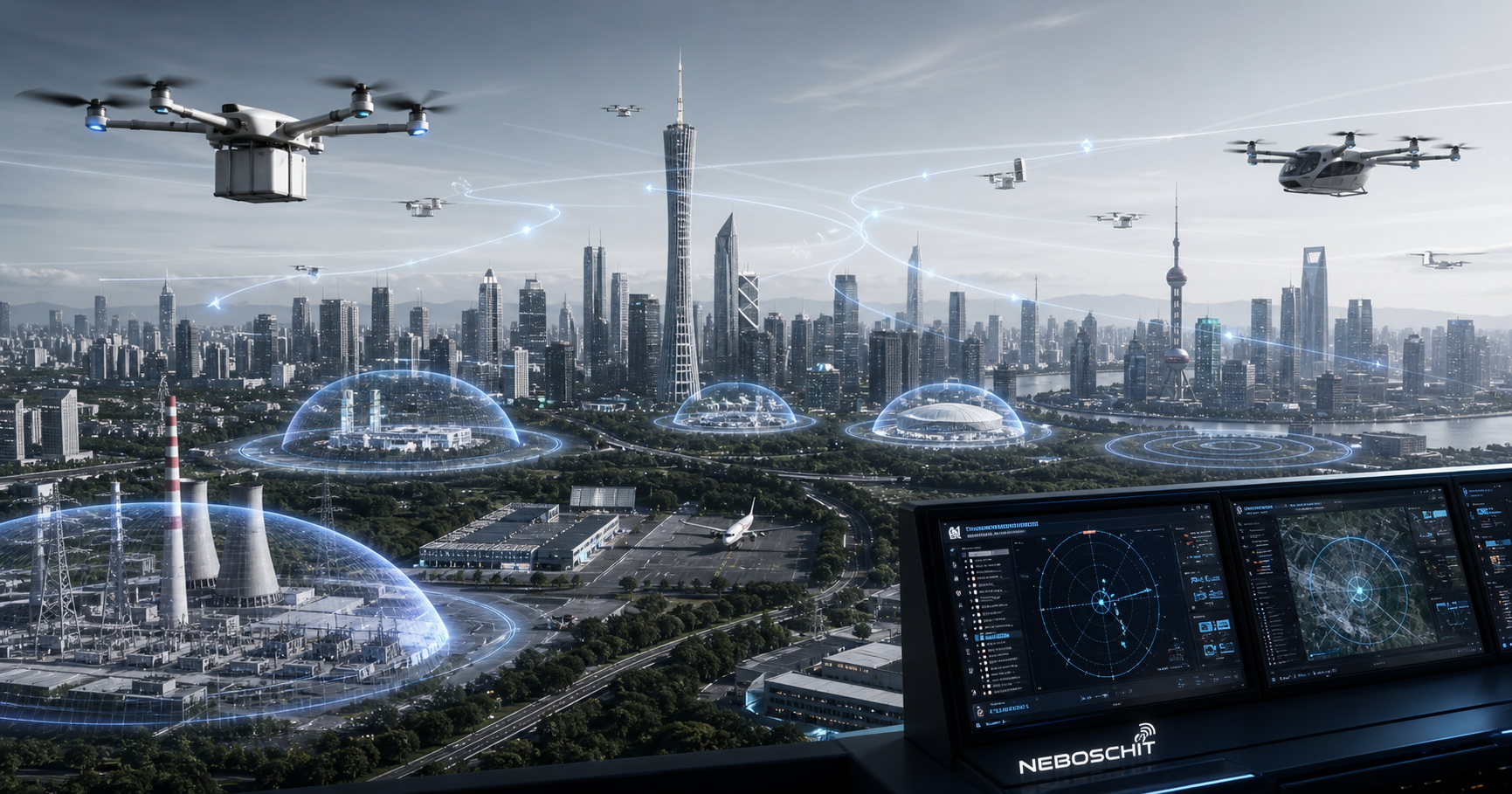
The global counter-UAV market is entering a rapid growth phase driven by geopolitical shifts, regulatory expansion, and the commercialization of drone technology.
Introduction: A Market Transformed by Urgency
The counter-unmanned aircraft system (C-UAS) industry has moved decisively from niche defense procurement to a mainstream security requirement. What was once the domain of military contractors is now being purchased by airport operators, energy companies, event organizers, and municipal governments across the world.
Several converging forces are driving this shift:
- The rapid proliferation of low-cost commercial drones capable of carrying payloads
- High-profile drone incidents at airports, prisons, and public events
- Lessons learned from the use of drones in armed conflicts (Ukraine, Middle East)
- New regulatory frameworks that require drone mitigation capabilities for certain facilities
In 2026, the global C-UAS market is estimated to be worth over USD 3.5 billion, with projections showing growth to USD 7+ billion by 2030 at a CAGR exceeding 20%.
This article examines where the market is growing fastest, what is driving demand in each region, and what technology is at the center of it.
Asia-Pacific: The Fastest-Growing Region

Asia-Pacific is projected to be the fastest-growing C-UAS market through 2030.
China: Policy-Driven Surge
China's "low-altitude economy" has been elevated to a national strategic priority, unlocking massive investment in commercial drone infrastructure -and simultaneously creating urgent demand for drone defense capabilities.
Key drivers:
- Airport drone incidents: China's Civil Aviation Administration has recorded a steady increase in drone incursions near airport perimeters
- Critical infrastructure: Power grids, petrochemical facilities, and water systems are all identified as high-priority protection zones
- Events and public safety: Major national events have established drone-free zone requirements, creating procurement cycles for temporary C-UAS deployment
Chinese government and state-owned enterprise procurement represents the largest single buyer segment in the region.
Japan and South Korea
Both markets are advancing drone integration (Japan lifted BVLOS restrictions in 2022, South Korea followed) while simultaneously building domestic counter-drone frameworks. Japan Drone Expo and related industry events in 2025-2026 showed strong interest in C-UAS from public safety agencies and infrastructure operators.
Southeast Asia
Rapidly growing commercial drone use in logistics, agriculture, and inspection -combined with less mature regulatory environments -is creating both opportunity and risk. Countries including Singapore, Indonesia, and Vietnam are beginning to formalize C-UAS procurement for airports and border regions.
Europe: Regulation-Led Market with High Defense Spending
The NATO Effect
Russia's use of drone swarms in Ukraine changed European defense thinking permanently. NATO member states have accelerated C-UAS procurement across all branches of the military and extended requirements to civilian critical infrastructure.
Key exhibition signals:
- Counter UAS Technology Europe (London): 2025 edition saw record attendance from both military and civil buyers, with a notable increase in participation from Eastern European nations
- Eurosatory (Paris): Counter-drone systems moved from peripheral exhibits to a dedicated hall in 2024
- DSEI (London): Multiple NATO member procurement teams conducted briefings specifically on C-UAS capability gaps
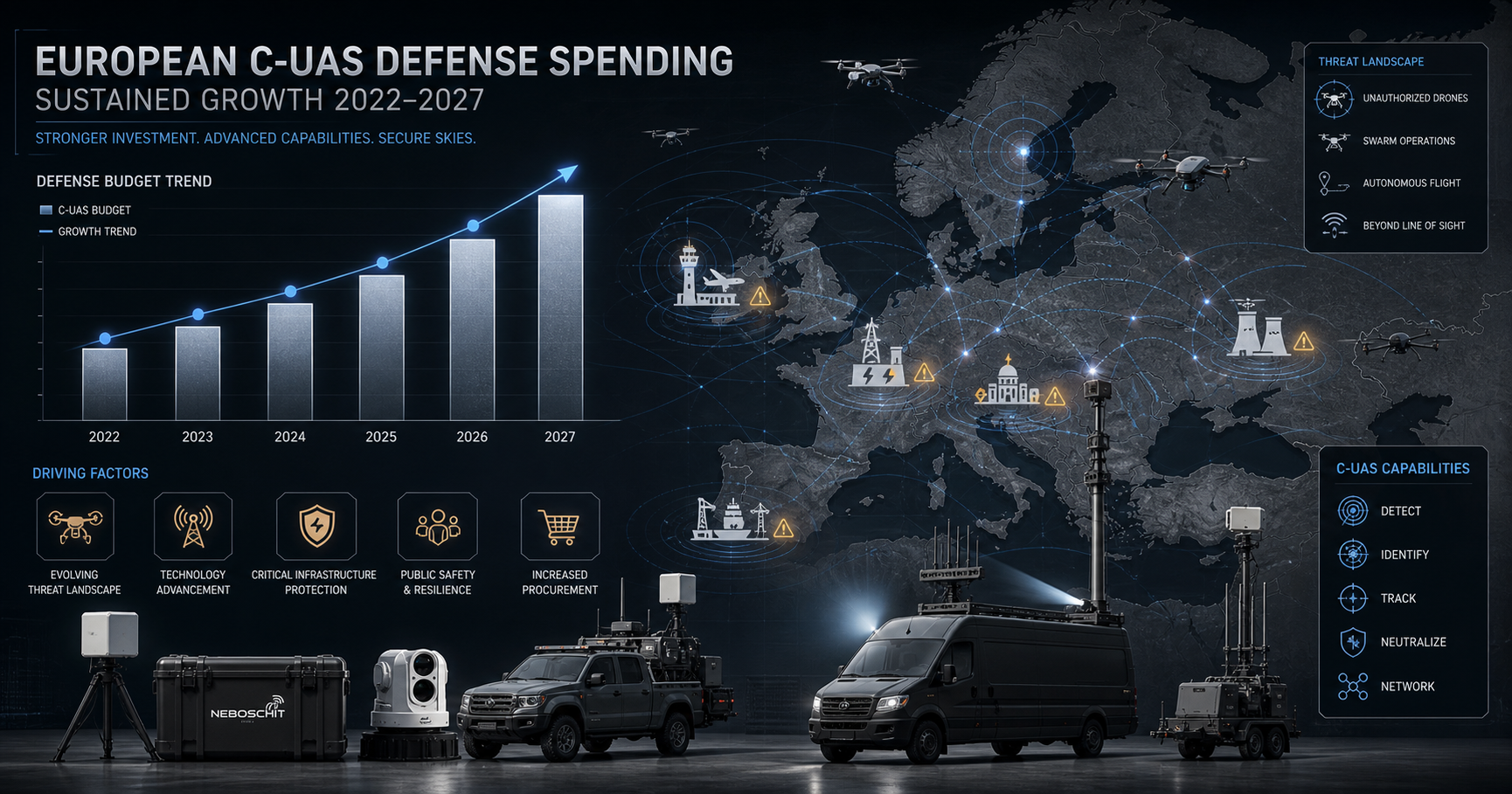
European defense budgets have increased C-UAS line items significantly since 2022.
Civil Aviation and Critical Infrastructure
The European Union Aviation Safety Agency (EASA) U-space framework, fully entering into force in 2023, created structured airspace for drone operations -but also highlighted the need for detection and response capabilities at airports and urban zones.
Airport operators across France, Germany, the UK, and the Netherlands have issued or are preparing to issue C-UAS tenders. Energy facility operators -particularly in nuclear and offshore wind -are increasingly included in procurement cycles.
UK: Post-Gatwick Urgency
The 2018 Gatwick airport shutdown (caused by drone incursions) remains a defining moment for UK C-UAS policy. Since then, the UK CAA has mandated drone detection capability at major airports. The DroneX exhibition in London has become a key market-facing event for both drone operators and C-UAS vendors.
North America: The Largest Single Market
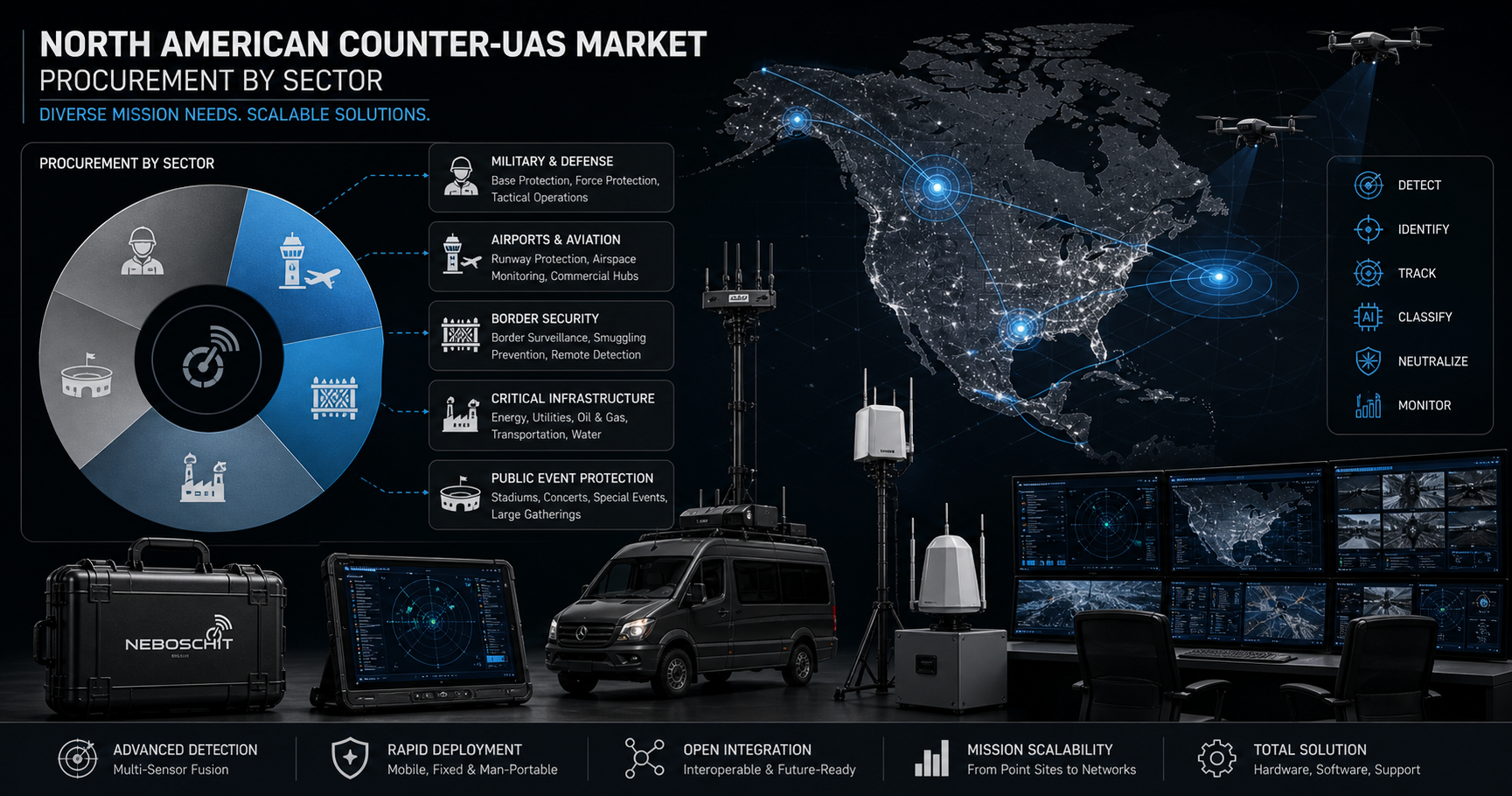
Military procurement still dominates North America, but civil sector demand is growing rapidly.
United States: Military to Civil Spillover
The US Department of Defense has invested heavily in C-UAS through programs like the Joint C-UAS Office (JCO). This military investment has accelerated technology development that is now flowing into civil markets:
- FAA regulations now require drone detection capability at certain airports
- Department of Homeland Security has C-UAS programs for border protection
- State and local law enforcement agencies are procuring portable C-UAS units
Commercial UAV Expo (Las Vegas) and XPONENTIAL both featured significant C-UAS presence in their 2024-2025 editions, with participation from defense primes and startups alike.
Canada and Mexico
Both markets are in early-to-mid adoption phases, largely following US regulatory leads. Canadian airport operators are beginning to formalize C-UAS requirements, while Mexico's border security needs create demand for portable detection and mitigation systems.
Middle East: Energy Assets and Defense Spending
The Middle East represents one of the highest-value regional markets for C-UAS, driven by:
- Oil and gas infrastructure: Attacks on Saudi Aramco facilities using drones (2019) created a permanent procurement mandate for energy sector C-UAS across the Gulf
- Military modernization: UAE, Saudi Arabia, Qatar and others are investing heavily in drone and counter-drone capabilities
- High-profile events: FIFA World Cup Qatar 2022 demonstrated large-scale civil C-UAS deployment feasibility
Key events: UMEX (Abu Dhabi), IDEX/NAVDEX (Abu Dhabi), World Defense Show (Riyadh)
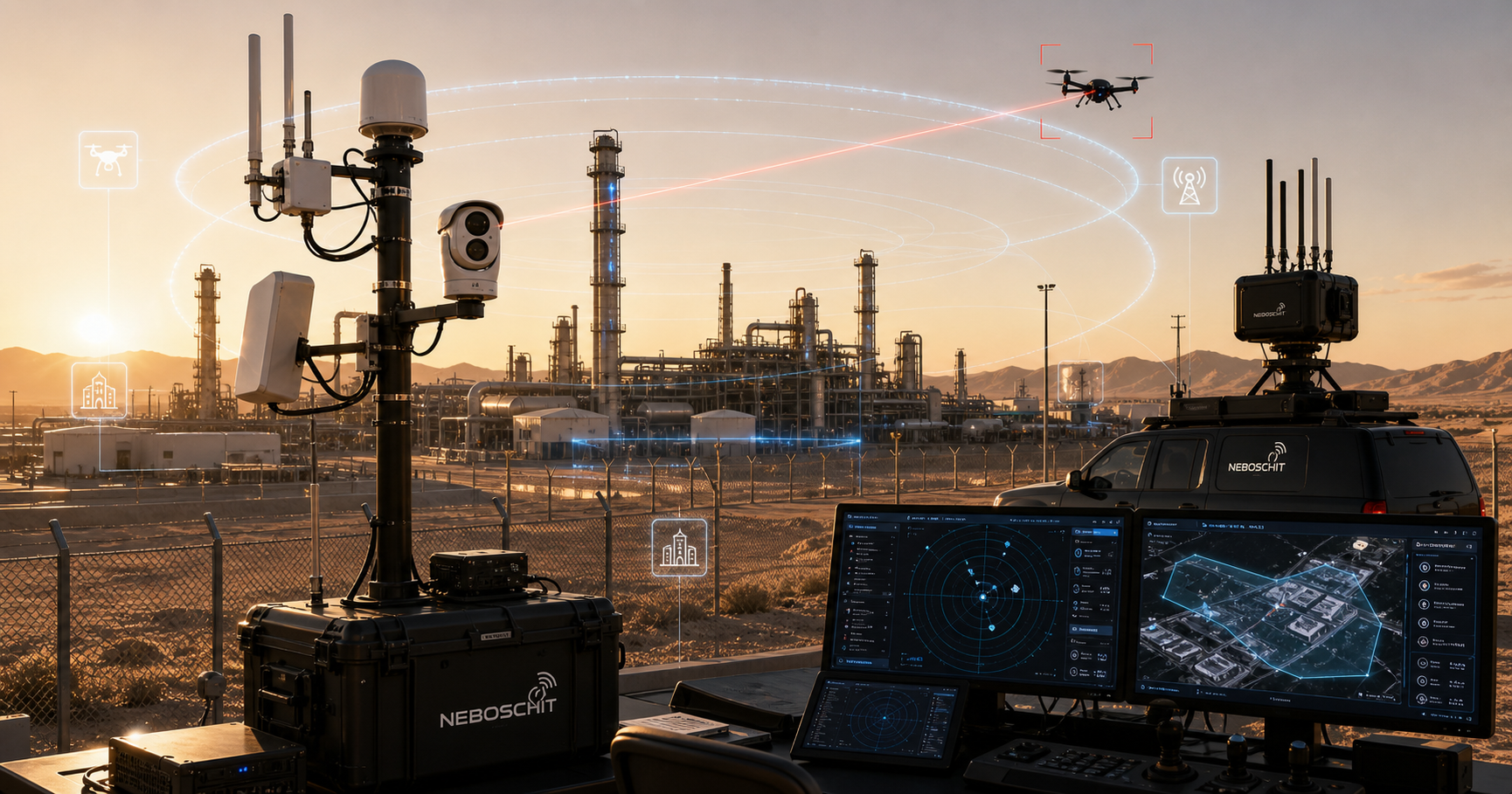
Gulf energy infrastructure represents one of the most urgent C-UAS application areas globally.
What Technology Is Winning the Market?
Across all regions, the following technology characteristics are consistently appearing in procurement requirements:
| Requirement | Why It Matters |
|---|---|
| RF jamming capability | Most commercial drones rely on RF communication -jamming disrupts both control and GPS |
| Wide frequency coverage | Drones operate across 380MHz-5.8GHz; narrow-band solutions miss targets |
| High output power | Effective range in real-world environments requires 50W-100W output |
| GaN semiconductor | Higher efficiency, power density, and reliability vs. legacy LDMOS |
| Modular integration | Buyers want components that integrate with existing systems, not proprietary black boxes |
| MOQ flexibility | Both single-unit procurement and large-scale deployment need to be supported |
GaN-based RF power amplifier modules have become the reference technology for C-UAS RF subsystems across all major markets, replacing older technologies due to superior performance per watt and field reliability.
Conclusion: The Market Favors Capable Component Suppliers
As the global C-UAS market matures, system integrators are increasingly looking for proven, high-performance RF module suppliers rather than buying complete black-box systems they cannot customize.
NeboShchit specializes in GaN RF power amplifier modules from 50W to 100W, covering 380MHz to 5.8GHz -the full range required for modern counter-drone applications. With MOQ=1 and support for custom frequency and power configurations, NeboShchit components are deployed in counter-drone systems across more than 25 countries.
Contact us to discuss which module configuration fits your C-UAS system requirements.
Sources: MarketsandMarkets, Grand View Research, NATO C-UAS assessment documents, EASA U-space framework, FAA UAS integration reports, industry exhibition attendance data (Commercial UAV Expo 2024, XPONENTIAL 2025, Counter UAS Technology Europe 2025)