
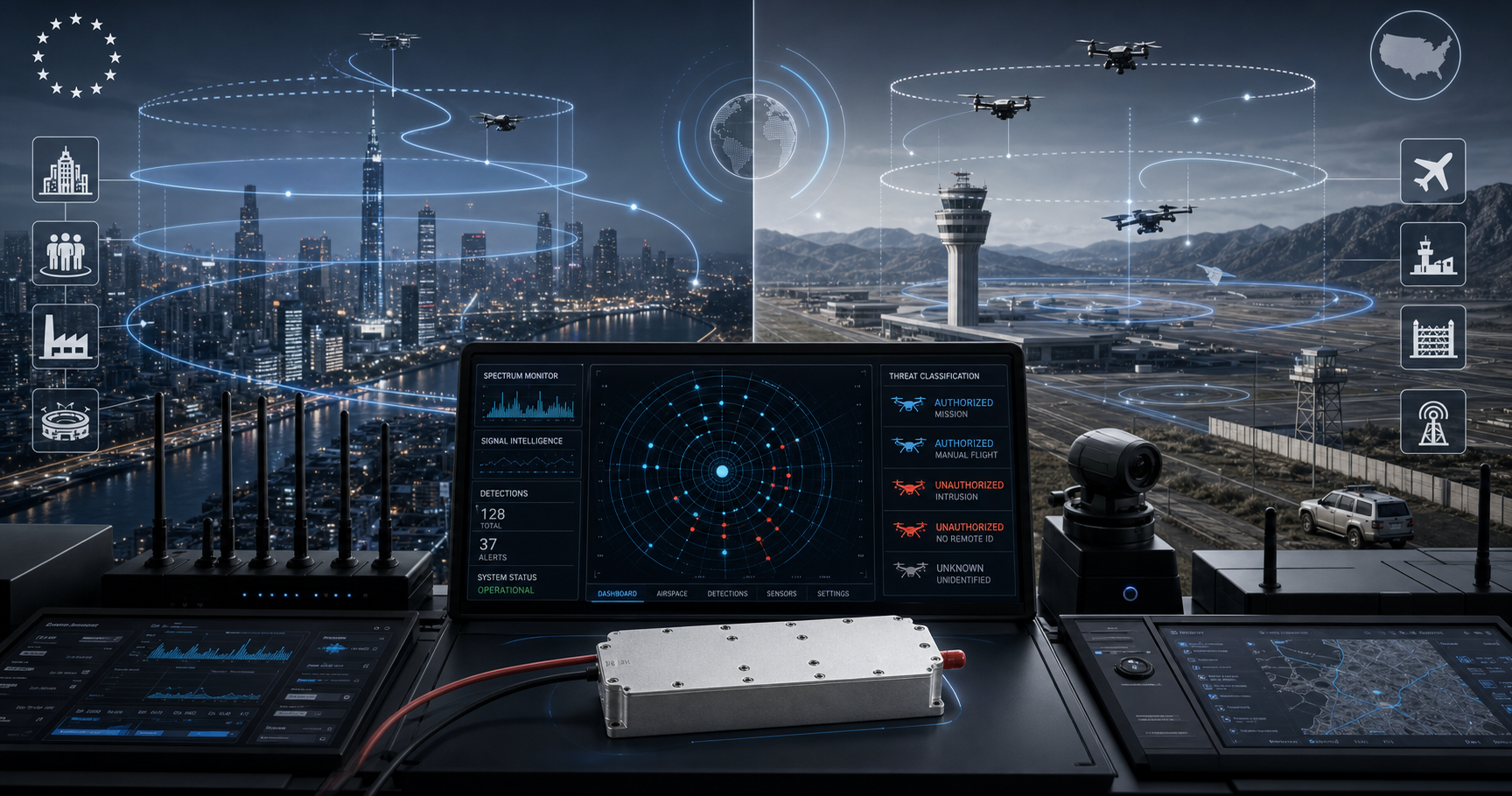
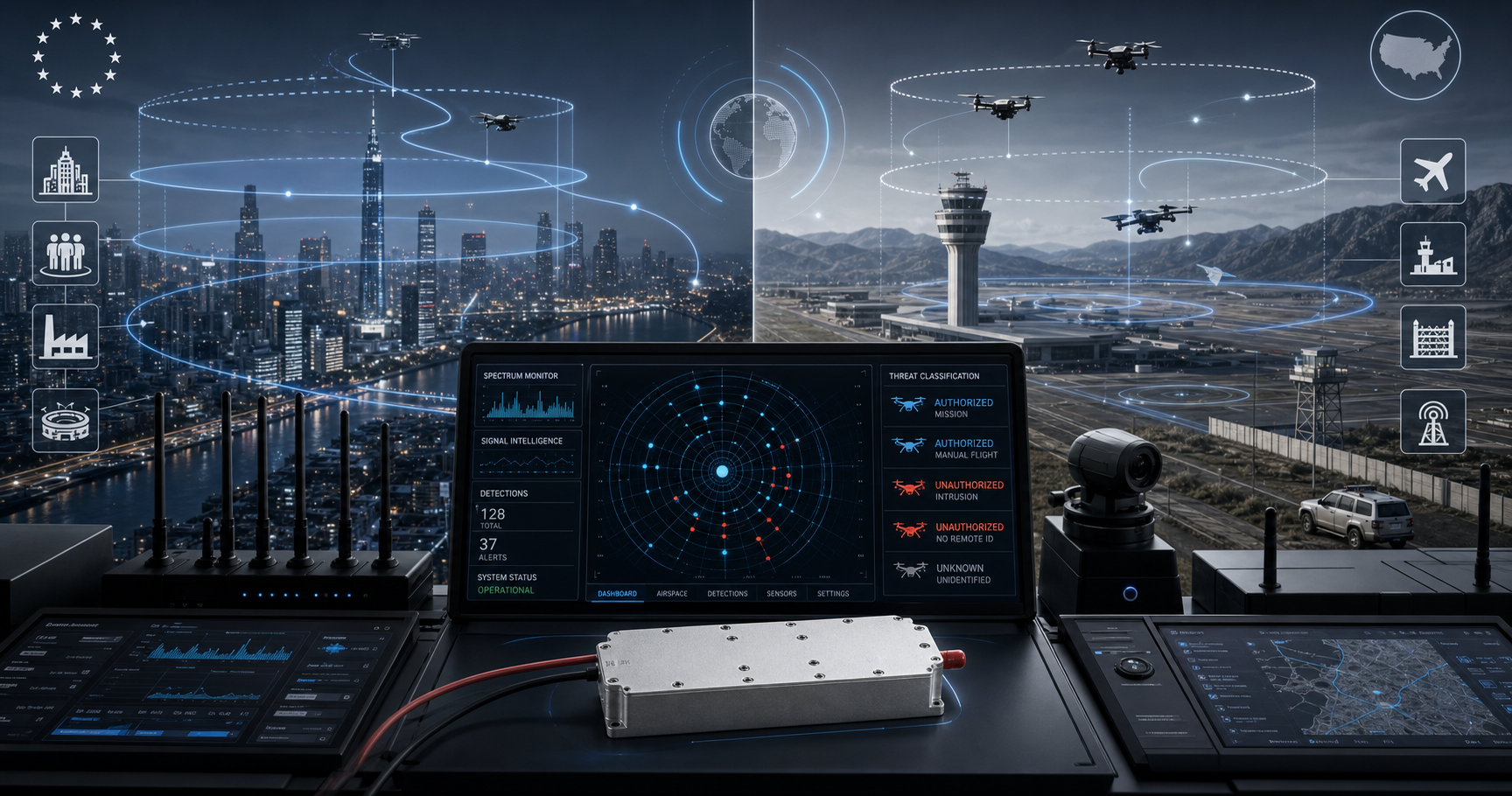
Both the EU U-space framework and the US FAA's evolving UAS rules are reshaping drone security requirements for facilities and integrators worldwide.
Introduction: Regulation Is the Fastest Driver of C-UAS Procurement
Across the globe, the single most reliable predictor of counter-drone procurement is not a security incident -it is a regulation. When a government mandates drone detection capability at airports, energy facilities, or public events, procurement follows within months.
In 2025-2026, two of the world's largest regulatory systems -the European Union's U-space framework and the US FAA's UAS integration rules -are both entering enforcement phases that directly expand the market for C-UAS technology.
This article breaks down what each framework requires, where the gaps are, and what system integrators should be preparing for.
Part 1: The EU U-Space Framework
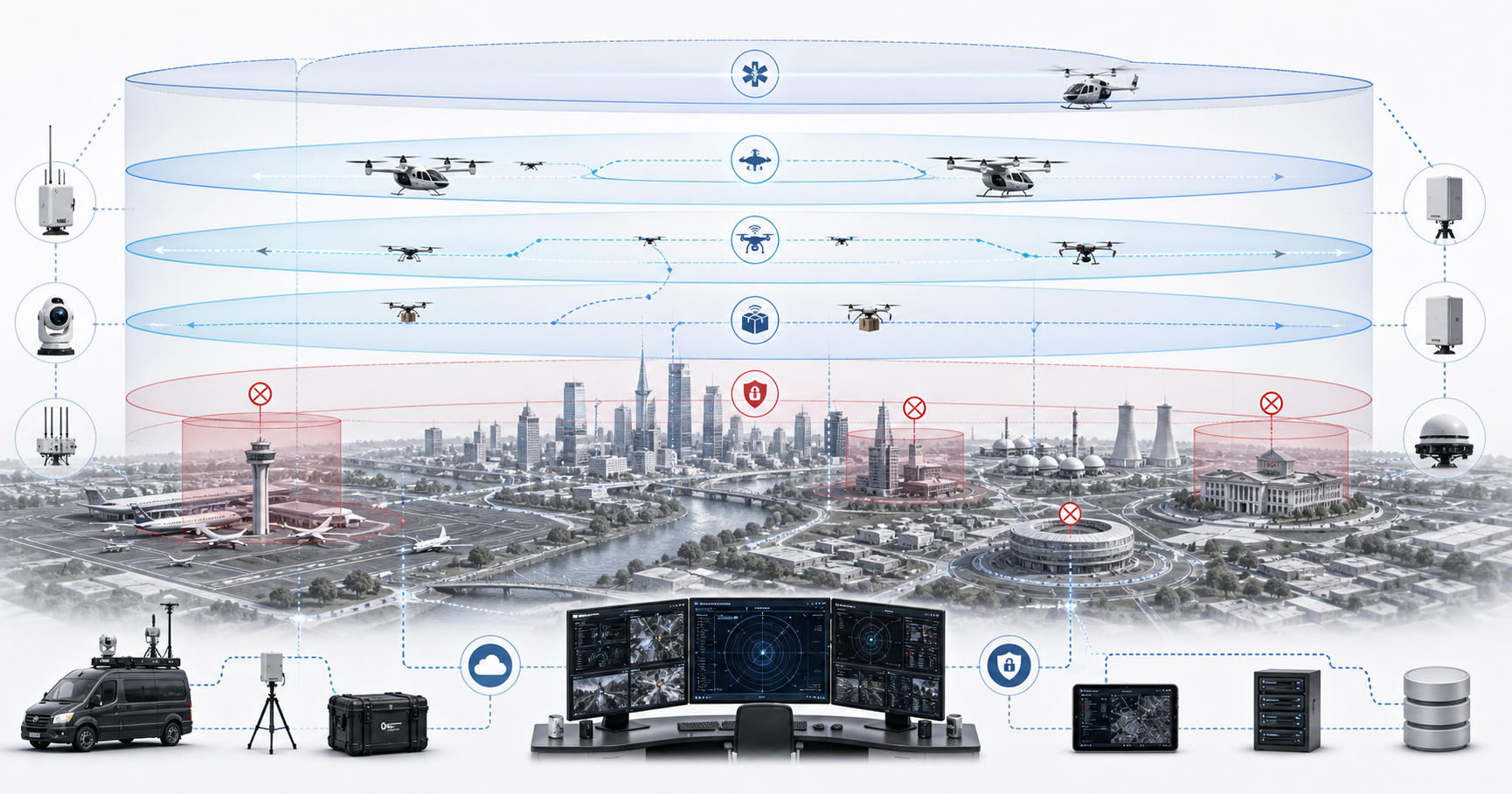
The EU U-space framework divides airspace into structured zones with different access requirements.
What Is U-Space?
U-space is the EU's structured airspace management framework for drones, established under Commission Implementing Regulation (EU) 2021/664 and related regulations. It came fully into force in January 2023 across all EU member states.
U-space establishes four core services that must be provided in designated airspace:
1. Network identification (drone operators must broadcast identity)
2. Geo-awareness (drones must know and respect boundaries)
3. UAS flight authorization (real-time authorization for flights)
4. Traffic information (situational awareness for multiple operators)
What U-Space Means for C-UAS
U-space creates structured drone traffic -but it also creates a clear distinction between authorized and unauthorized flights. Once U-space is operational in a given airspace, any drone not transmitting a valid network ID is by definition non-compliant and potentially a threat.
This makes C-UAS detection a natural enforcement tool for U-space zones:
- Airport operators need to detect drones that lack U-space authorization
- Urban zone managers need to identify and respond to non-compliant incursions
- Event organizers can use C-UAS to enforce temporary U-space restrictions
Key markets where U-space is driving C-UAS procurement:
- Netherlands (Amsterdam drone corridor -Amsterdam Drone Week 2025 was dominated by U-space enforcement discussions)
- France (Paris critical infrastructure zones ahead of international events)
- Germany (airport perimeter protection mandates)
- Nordic countries (early adopters of drone traffic management)
Pending EU Expansion: Critical Infrastructure Directive
The EU's Network and Information Security Directive (NIS2), fully transposed in 2024, explicitly includes drone threats as a concern for critical infrastructure operators. Energy companies, water utilities, and digital infrastructure operators in the EU must now assess drone risk as part of their broader cybersecurity and physical security posture.
This is creating a new buyer segment: EU-regulated infrastructure operators who previously had no formal C-UAS procurement mandate.
Part 2: US FAA Rules -From Waivers to Mandates
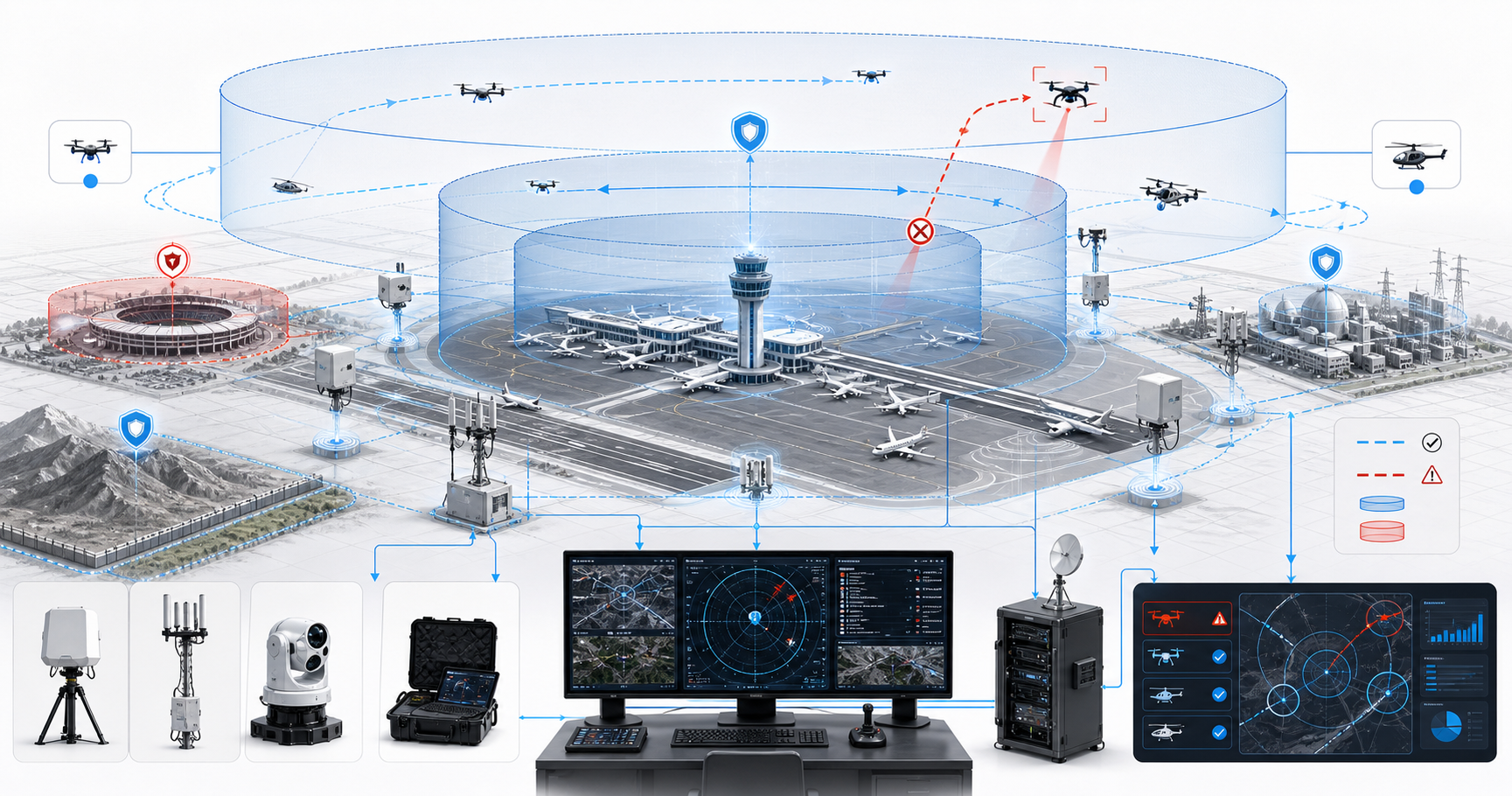
The FAA's phased approach to UAS integration is creating both drone use cases and counter-drone requirements simultaneously.
Remote ID: The Foundation Layer
The FAA's Remote ID rule (effective September 2023) requires most UAS operating in US airspace to broadcast identification and location information. Like U-space, this creates a baseline against which unauthorized drones can be identified.
For C-UAS operators, Remote ID means:
- Drones that don't broadcast are non-compliant and detectable by their absence from the RF environment
- RF-based detection systems can now cross-reference detected signals against expected Remote ID broadcasts
- The regulatory gap between "flying a drone" and "flying an authorized drone" is becoming measurable
Airport Security: FAA Reauthorization and C-UAS Mandates
The FAA Reauthorization Act of 2024 included provisions specifically addressing drone threats at airports:
- Expanded the list of airports required to have drone detection capability
- Authorized additional C-UAS testing programs at major hubs
- Extended the authority of federal law enforcement to use C-UAS mitigation measures at designated facilities
Key insight from Commercial UAV Expo 2024 (Las Vegas) and XPONENTIAL 2025: Airport procurement teams are actively sourcing modular C-UAS components -particularly RF detection and jamming subsystems -that can be integrated with existing security infrastructure rather than replaced wholesale.
DHS and Border Security
The Department of Homeland Security's C-UAS programs continue to expand, with specific emphasis on:
- Portable and vehicle-mounted systems for border patrol
- Multi-sensor fusion (RF + radar + EO/IR)
- Rapid-deployment capability for temporary event security
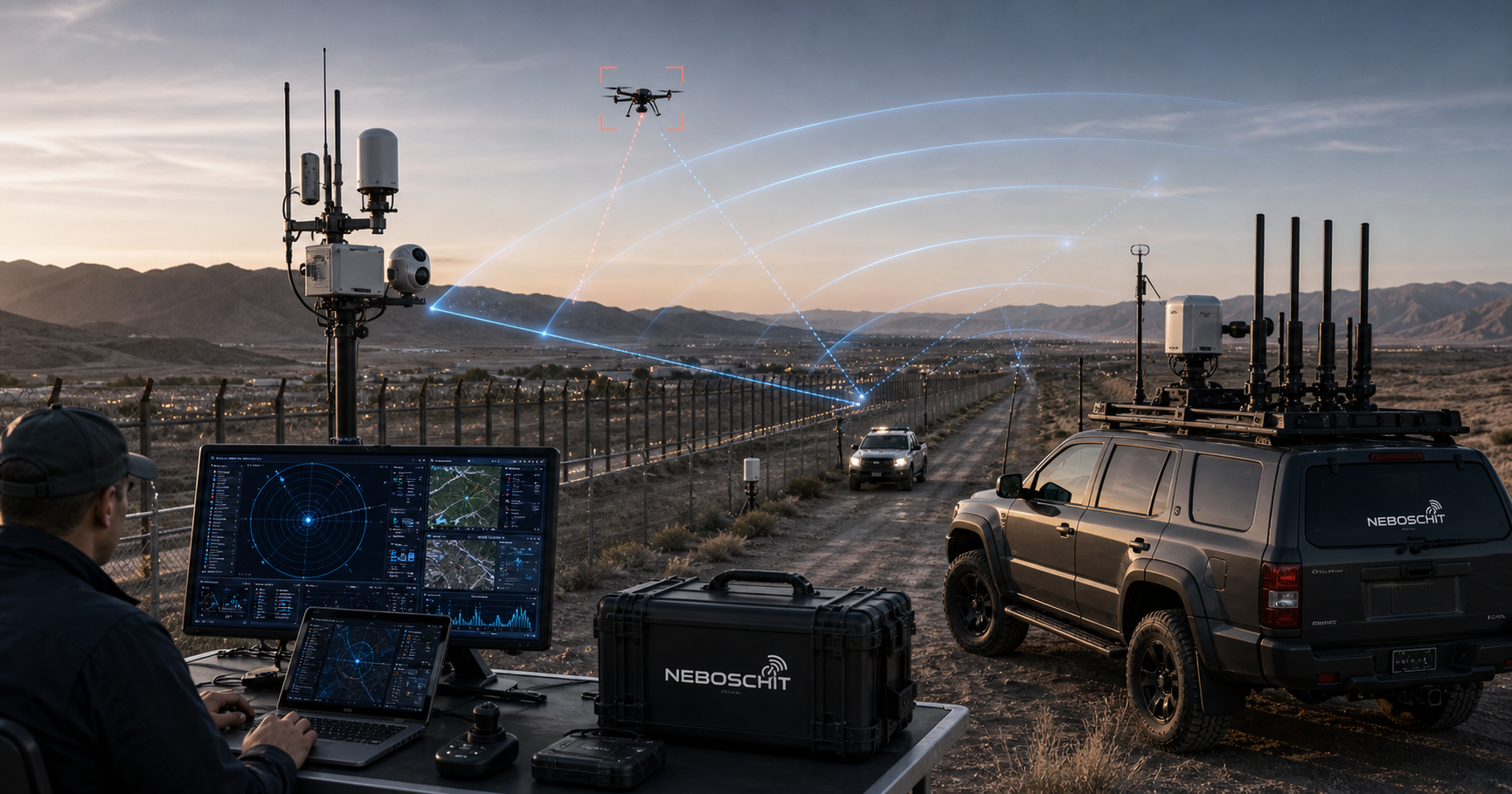
Portable C-UAS systems are increasingly deployed by US border security agencies for rapid, adaptable coverage.
Part 3: What This Means for System Integrators
The Compliance Architecture Problem
Both EU U-space and FAA Remote ID create a situation where regulatory compliance requires knowing which drones are where -but enforcement requires the ability to act on that knowledge. The detection layer and the mitigation layer must work together.
Most facility operators and government agencies are not building C-UAS from scratch -they are integrating detection sensors, command software, and mitigation hardware into existing security operations centers.
This creates strong demand for:
- Modular RF jamming subsystems that can be integrated without replacing existing infrastructure
- Wideband coverage -EU and US drone operators use drones across 380MHz-5.8GHz; single-band jamming misses threats
- High power, reliable operation -regulatory environments require documented, defensible system performance
Technology Specifications That Match Regulatory Requirements
| Regulatory Requirement | C-UAS Technical Implication |
|---|---|
| Detect non-compliant drones (no Remote ID / U-space ID) | RF monitoring across 380MHz-5.8GHz |
| Respond to incursions within airspace restriction zones | Fast-activation RF jamming modules |
| Operate continuously at airports and critical infrastructure | Industrial-grade, 24/7 capable hardware |
| Customizable deployment (fixed + mobile + portable) | Modular components, not proprietary systems |
| Support evidence collection for enforcement actions | Integration with detection and logging systems |
GaN-based RF power amplifier modules satisfy all of these requirements at scale, with consistent performance across the frequency range that matters for modern drone threats.
Conclusion: The Window Is Now
EU U-space enforcement is accelerating. FAA Remote ID compliance is being monitored and enforced. The gap between regulatory mandate and deployed capability is where procurement happens.
System integrators who can offer compliant, integration-ready C-UAS subsystems to European and North American buyers are entering one of the fastest-growing segments in the security technology market.
NeboShchit's GaN RF power amplifier modules -50W and 100W, 380MHz to 5.8GHz -are designed for exactly this integration scenario: high performance, wide frequency coverage, modular form factor, and proven reliability in deployed counter-drone systems.
Get in touch to discuss how NeboShchit modules fit your C-UAS architecture.
Sources: European Commission Implementing Regulation (EU) 2021/664, FAA Remote ID Rule (14 CFR Part 89), FAA Reauthorization Act of 2024, NIS2 Directive (EU) 2022/2555, Commercial UAV Expo 2024 session notes, XPONENTIAL 2025 industry briefings, Amsterdam Drone Week 2025 proceedings