
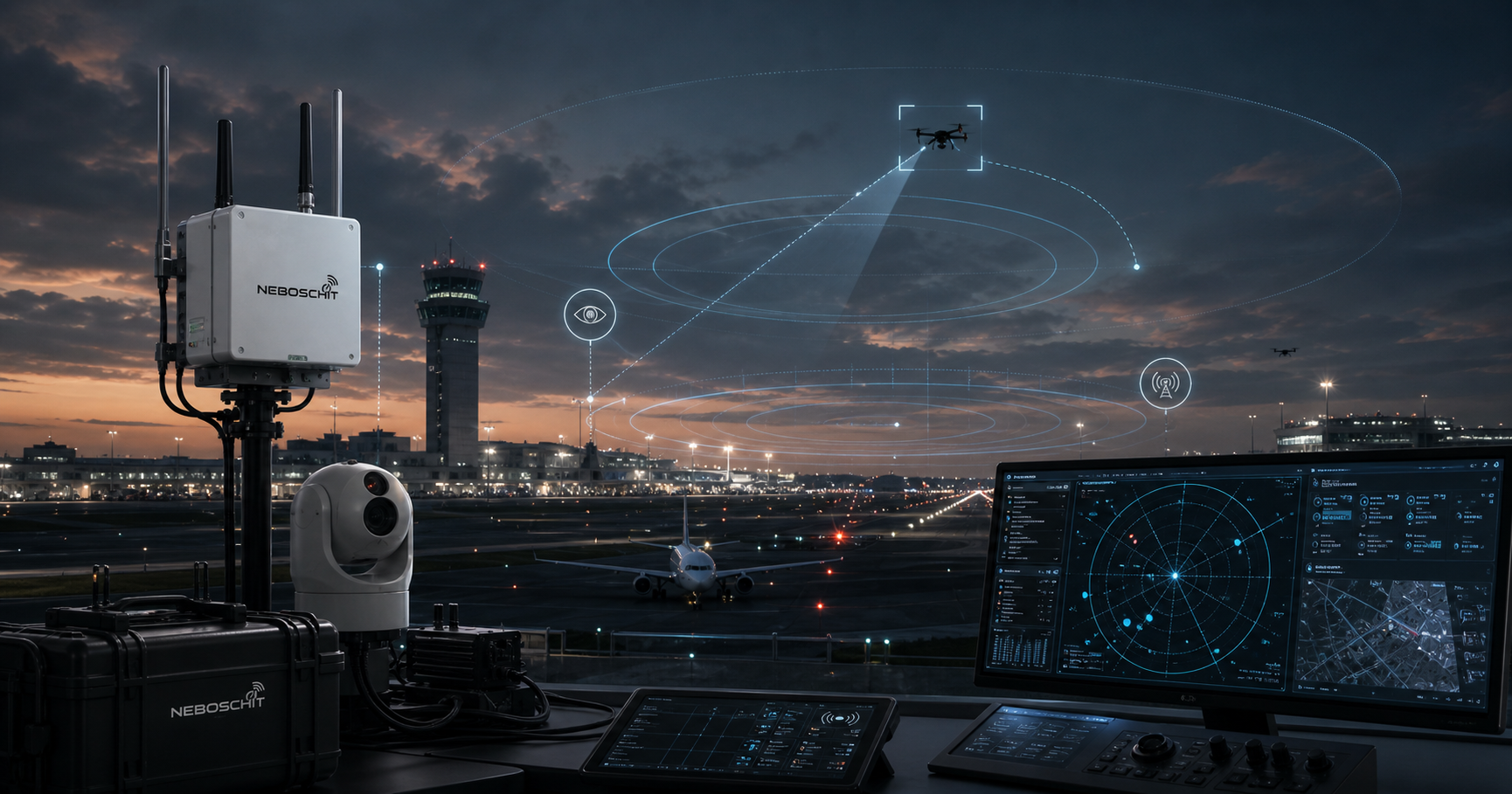
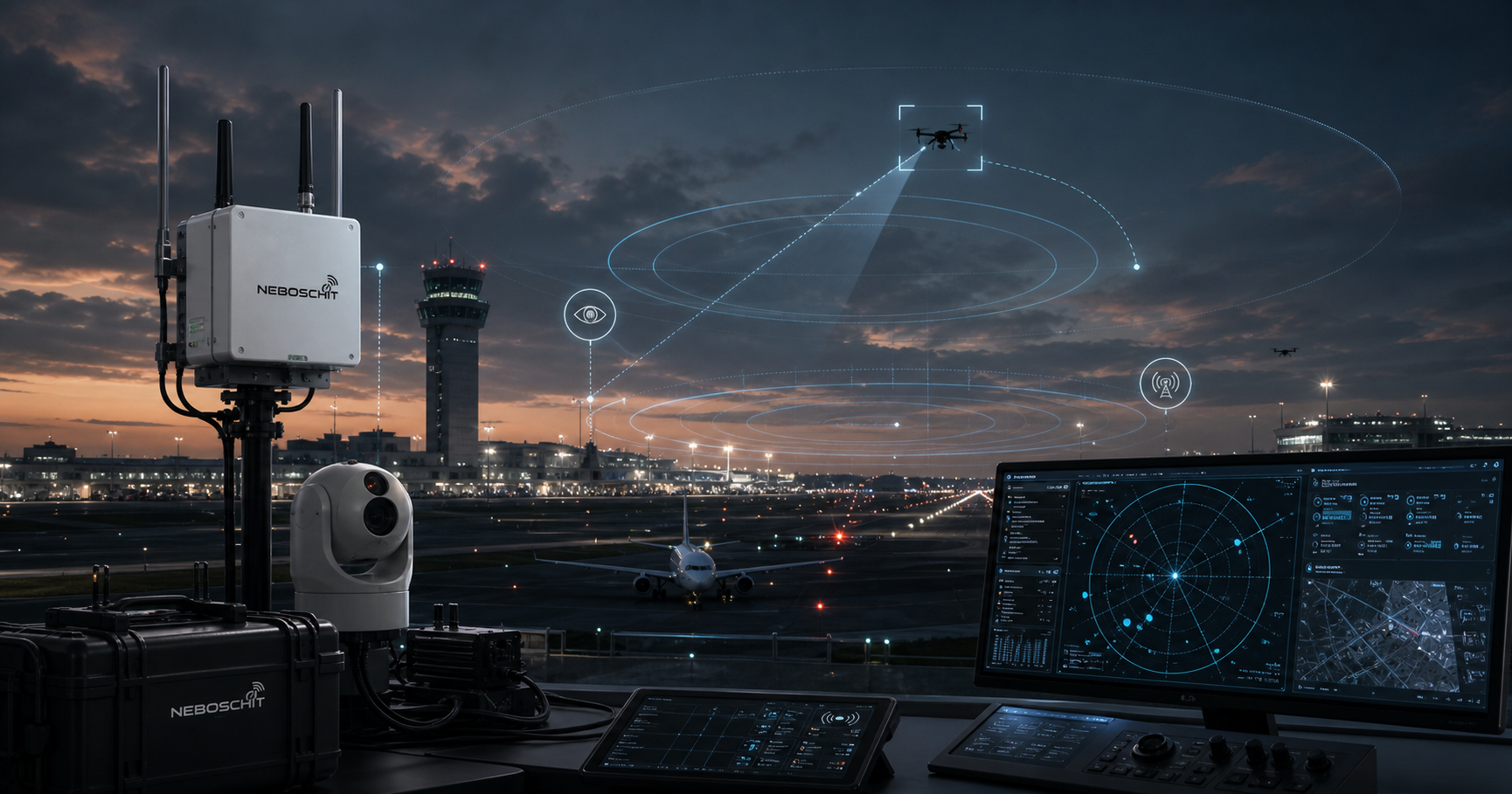
The numbers no longer leave room for optimism. In the first three months of 2025 alone, the FAA recorded 411 unauthorized drone incursions near US airports -a 25.6% increase over the same period in 2024. Across Europe, drone-related disruptions at airports have quadrupled between January 2024 and November 2025, according to a Euronews analysis. And in April 2025, a United Airlines Boeing 737 on approach to San Diego reportedly struck a small drone at 3,000 feet -a collision that, had it occurred near a turbine or control surface, could have had catastrophic consequences.
These are not edge cases anymore. They are a pattern.
The Gap Between How We Talk About the Problem and How We're Solving It
For years, the public conversation around drone threats at airports has oscillated between dismissiveness ("it's just hobbyists") and alarmism ("a drone will bring down an airliner"). Both framings miss the actual operational reality, which is considerably more complex -and more urgent.
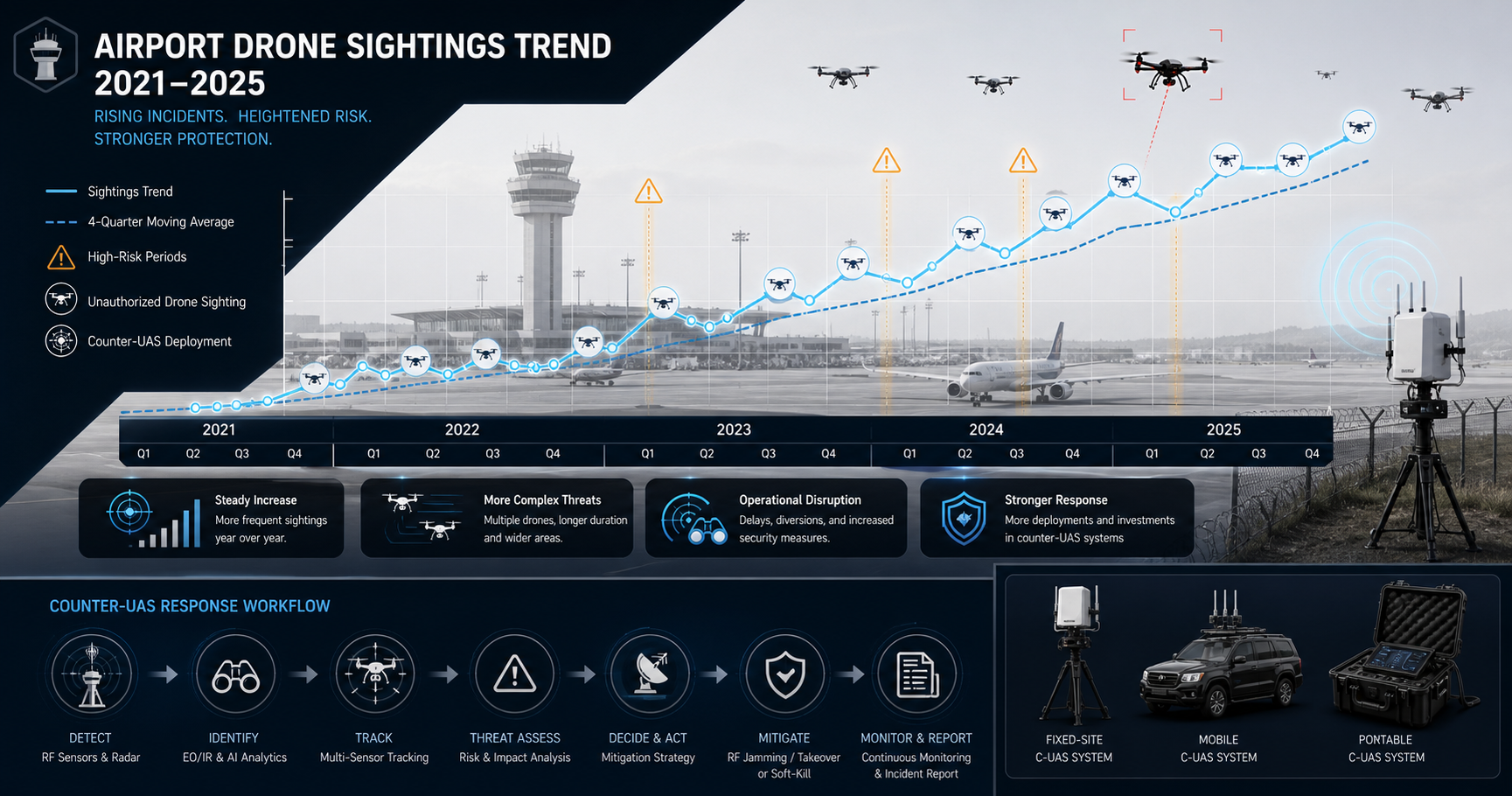
FAA data shows a consistent upward trend in drone sightings near airports, with 2025 on pace to exceed all prior years.
The FAA receives more than 100 drone-proximity reports near airports every single month. Nearly two-thirds of near-midair collisions at the 30 busiest US airports in 2024 involved drones, per an Associated Press analysis of ASRS safety data. At San Francisco International, pilots reported a drone within 300 feet of their cockpit with no time to react. In Boston, police arrested two men flying a drone near Logan International using transponder data to track the aircraft -suggesting a level of intentionality that goes beyond accidental intrusion.
In Europe, the trend is equally alarming. In November 2025, Brussels Airport reported ten drone incidents in a single eight-day window, grounding flights and triggering an emergency review. In Copenhagen, Danish authorities noted that a drone near the airport appeared to deliberately switch its lights on and off as it approached -behavior consistent with reconnaissance or provocation rather than an accidental incursion. The Danish Prime Minister publicly stated that Russian involvement "could not be ruled out."
This is the problem with treating drone incidents as an enforcement matter rather than a security infrastructure matter. Enforcement catches people after the fact. What airports need is the ability to detect, identify, and neutralize a drone threat before it reaches the perimeter -or before the pilot knows they have been spotted.
What Effective Airport C-UAS Looks Like
The challenge is layered. Consumer drones capable of causing serious damage to aircraft are available for under $1,000. They operate across multiple RF bands -2.4GHz and 5.8GHz for most commercial platforms, with control links often on 433MHz or 900MHz. Some FPV platforms use analog video transmission on non-standard frequencies that narrow-band detection systems miss entirely. And as drone manufacturers have added frequency-hopping protocols to their firmware, older jamming systems have lost effectiveness against updated hardware.
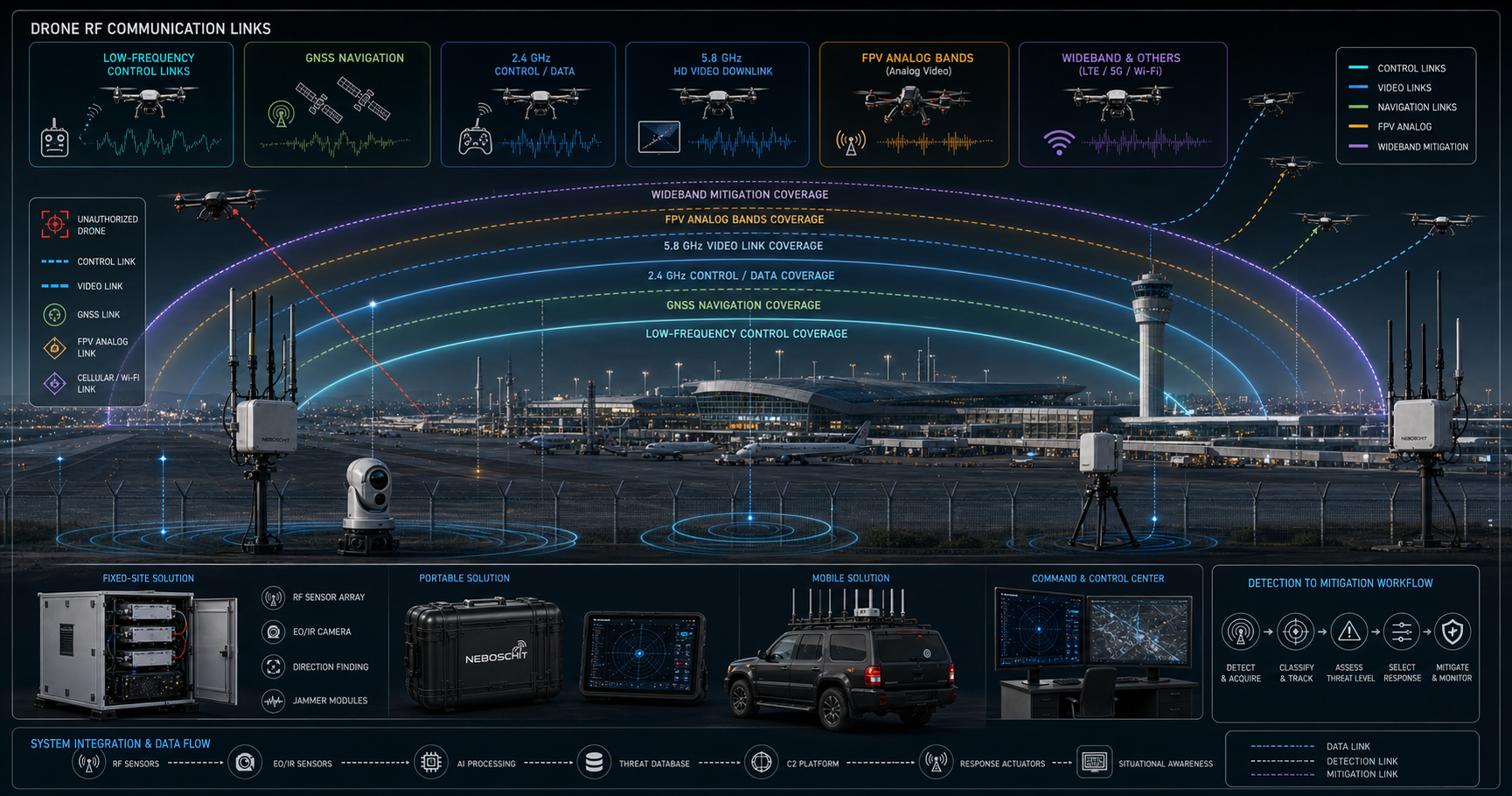
Modern consumer and commercial drones operate across 433MHz to 5.8GHz. Effective counter-drone systems must cover the full range.
The technical baseline for credible airport C-UAS has converged around several requirements that are now reflected in procurement documents across the US, UK, and EU. Detection must cover the full 380MHz-5.8GHz spectrum. Mitigation must be capable of continuous output -drones don't politely wait for a system to warm up. And the hardware must perform reliably in outdoor conditions: rain, temperature extremes, and electromagnetic environments already dense with aviation transponder traffic.
GaN (Gallium Nitride) semiconductor technology has become the reference standard for RF jamming subsystems in airport C-UAS deployments. Compared to legacy LDMOS technology, GaN modules deliver significantly higher output power per unit size, better thermal efficiency (which matters for 24/7 operational requirements), and consistent performance across wideband frequency ranges. A single GaN module can cover 500MHz-.2GHz at 50W output -the kind of wideband coverage that blankets all primary drone communication frequencies in a single unit.
The Authorization Gap That Leaves Airports Exposed
Even where technology exists, a significant legal problem persists. In the United States, only a handful of federal agencies -the Departments of Defense, Homeland Security, Energy, and Justice -are currently authorized to detect, track, or disable drones. State and local law enforcement, airport security teams, and private operators remain largely powerless even when drones directly threaten their facilities.
Senator Tom Cotton and bipartisan co-sponsors have been advancing the DEFENSE Act, which would allow trained state and local law enforcement to detect and disable hostile drones at airports and large public gatherings. But as of mid-2025, the authorization gap is still open -meaning that at most US airports today, security teams can observe a drone incursion and report it, but cannot legally take active countermeasures.
In the EU, the U-space framework creates a structured authorization environment for commercial drone flights -but enforcement tools for non-compliant incursions are still being formalized at the member-state level. UK airports, following the 2018 Gatwick shutdown, have the most mature civil C-UAS frameworks in Europe, but even there, protocols vary significantly between facilities.
The practical implication is that airports and facility operators procuring C-UAS today are often doing so in anticipation of authorization frameworks, positioning themselves to activate mitigation capability as soon as legal authority catches up with technological readiness.
The Cost of Doing Nothing
A single drone-related closure at a major hub airport costs millions of dollars in diverted flights, missed connections, and operational disruption -before accounting for any physical damage. The 2018 Gatwick incident, caused by drone sightings over three days, disrupted approximately 1,000 flights and affected around 140,000 passengers. The operational cost alone was estimated at tens of millions of pounds.
More recently, the April 2025 United Airlines collision near San Diego -if confirmed as an actual drone strike rather than a bird strike -would represent the first documented case of a commercial aircraft being hit by a consumer drone in US airspace at altitude. The investigative and regulatory consequences of that finding, if confirmed, are likely to accelerate both federal authorization and airport procurement timelines significantly.
NeboShchit's CN-GAN-50W module covers 500-200MHz at 50W output -designed for integration into fixed and mobile airport C-UAS systems.
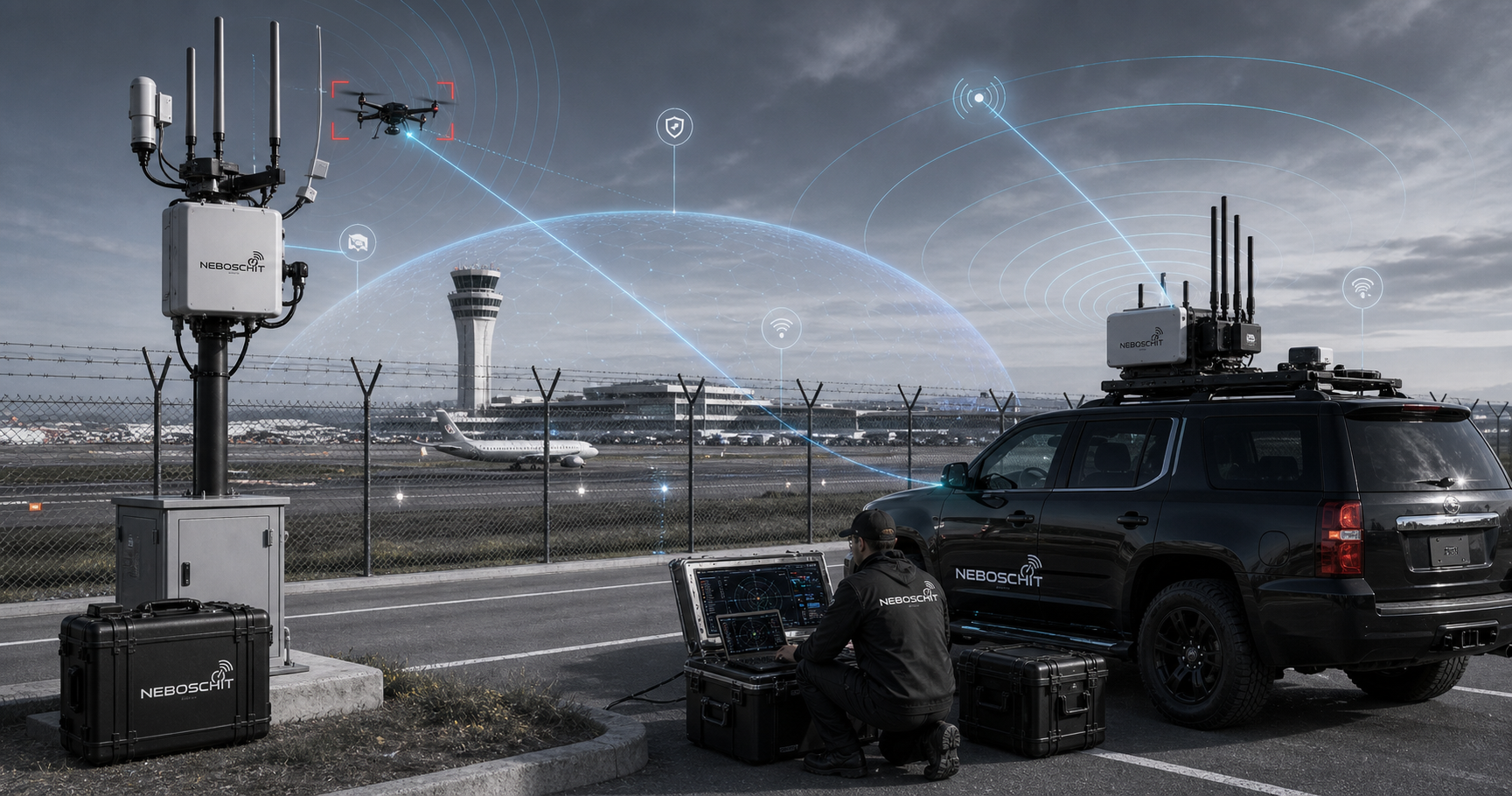
Systems built around modular, wideband GaN RF components can be deployed as fixed perimeter installations, vehicle-mounted units for airfield patrol, or portable devices for rapid response. The modular architecture matters because airports operate in a procurement environment where "rip and replace" is rarely feasible -the ability to integrate high-performance jamming subsystems into existing security infrastructure is a practical necessity, not a preference.
The incidents of 2024 and 2025 have made clear that airport drone security is no longer a future problem to prepare for. It is a present-tense operational requirement that existing infrastructure is not adequately equipped to handle. The technology to address it exists. The procurement frameworks are developing. The question for facility operators and system integrators is whether they are ahead of the next incident, or responding to it.
If you're evaluating RF jamming subsystems for airport or critical infrastructure C-UAS integration, NeboShchit's GaN module range covers 380MHz-5.8GHz at 50W and 100W output levels, with MOQ=1 and full support for custom frequency configurations. Contact us to discuss your system requirements.
Sources: FAA UAS Sightings Data · The Debrief -Drone Incursions Surging 2025 · Washington Times -United Airlines Drone Strike San Diego · EuroNews -Europe's Drone Problem · airsight -NORAD Drone Threat · D-Fend Solutions -Key Takeaways from Recent Drone Incidents